


The second word was “Lilith.”
Lilith—born in Jewish and Mesopotamian mythology, cast as a demon and child-stealer, later reborn in modern culture as a symbol of female defiance.
Sarah knew her well.
And she borrowed Lilith’s fire for her own cause—to put women where they belonged: on the main stage.
Back then, radio programmers lived by a quiet but iron rule:
“Never play two women back-to-back.”
Concert promoters followed the same logic.
Until a soft-spoken Canadian decided that rule needed breaking.
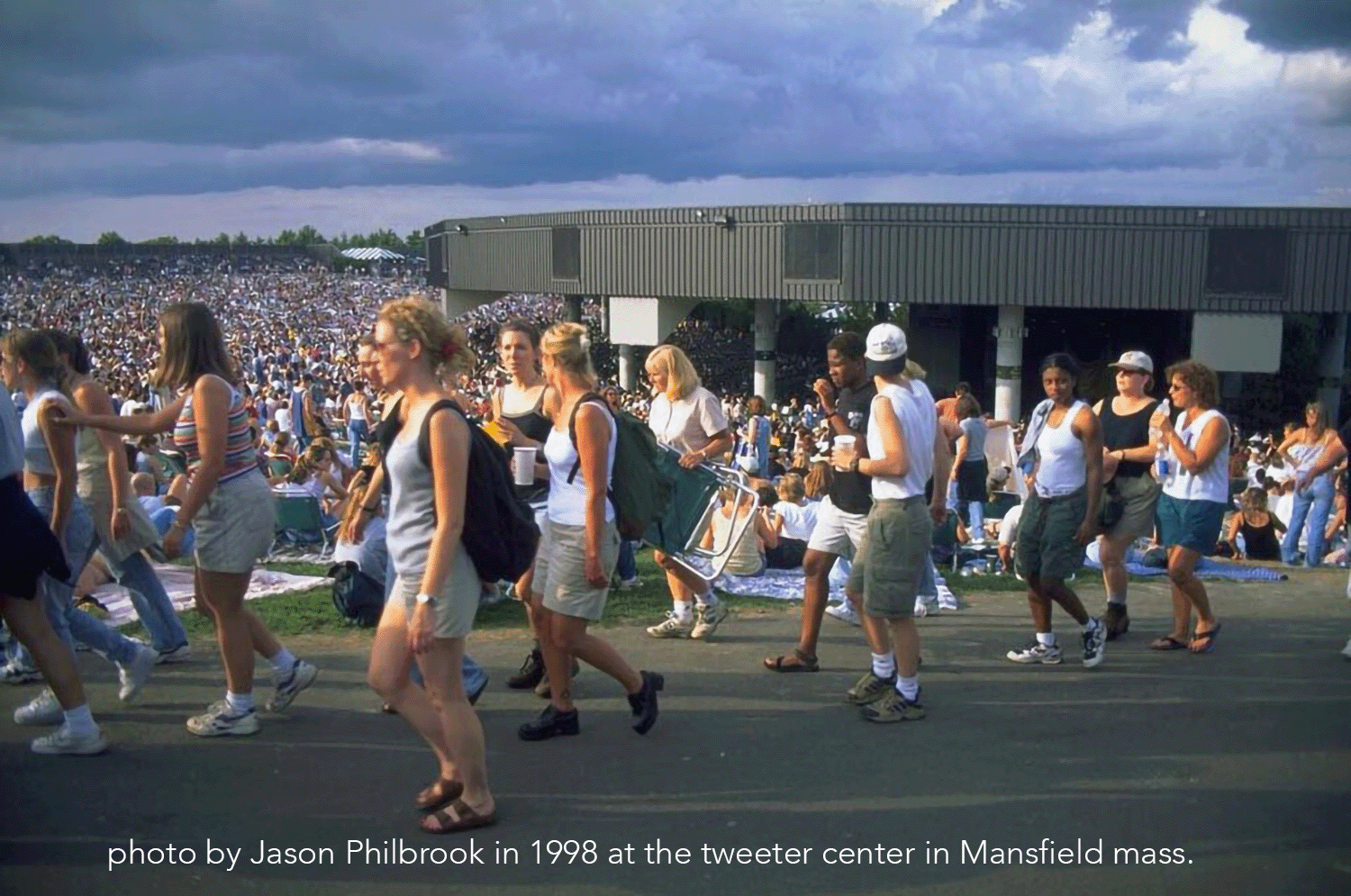
In 1996, Sarah McLachlan teamed up with Paula Cole and Lisa Loeb for a small string of shows—three women, one stage.
The experiment grew into Lilith Fair, a traveling festival that, by the following summer, became a movement.
Like her mythic namesake, Sarah refused to obey.
The rule was shattered—and so was the glass ceiling of the live-music business.
Businessmen—mostly men—love numbers, so here they are:
$16 million in revenue in its first year, making Lilith Fair the top-grossing festival in North America.
Over the next three years, 1.5 million fans, 130 shows, and $52 million USD in total sales—$10 million of which went to women’s charities.
The line-ups read like a living map of female artistry:
Tracy Chapman, Sheryl Crow, Indigo Girls, Jewel, Missy Elliott, Erykah Badu, Dido, Nelly Furtado, Christina Aguilera, Dixie Chicks.
Folk beside hip-hop, roots beside R&B, zeitgeist beside timelessness.
Lilith proved that diversity isn’t a risk—it’s the product, and the attraction.
So what exactly did Lilith Fair liberate?
Not “women” as a whole—that would be too grand.
But it pulled female musicians out of the margins and onto center stage.
Before Lilith, the question was: “Can an all-female line-up even sell?”
After Lilith: “Why don’t we do this more often?”
At first, labels and sponsors wanted nothing to do with it.
Too niche, too risky, too female.
Then the numbers—and the magic—spoke for themselves.
Behind the scenes, something bigger formed: networks instead of rivalries.
Mentorship on the tour bus. Solidarity backstage.
The shared conviction that “headliner” is not a gendered word.
Lilith Fair was also a Canadian moment.
That quiet, pragmatic, undramatic “let’s just do it” spirit north of the 49th parallel.
No messiah complex—just craftsmanship: build the stage, fill it, give something back.
Today, a new documentary, “Lilith Fair: Building a Mystery,” revisits the story—and rightly so.
Progress isn’t a triumph; it’s maintenance work.
McLachlan herself says Lilith was a rejection of the “insecure” norms of the touring world.
Her anger at the current backlash against women’s rights proves how relevant the movement still is.
What Lilith Actually Changed
Visibility:
When you see women headlining twenty nights in a row, “exception” turns into “normal.”
That shift reshapes programming, budgets, and media narratives.
Economics:
Selling tickets and giving back moves the moral question into the profit column—a rare efficiency.
Sponsors love measurable impact. Lilith delivered both.
Storytelling:
Every scene needs its mythology. Lilith became one:
We were there. We saw it. We felt it.
Myths are the best currency against the next “That can’t be done.”
Is the fight over?
How mystical that would be.
But no—headliners are still mostly male, pay gaps still yawning, reviews still written through the old double standard.
And yet: the next generation—Brandi Carlile, Haim, Olivia Rodrigo—stands on shoulders that straightened in 1997.
Sarah’s still making music, still mentoring, still passing the torch.
That’s not nostalgia. That’s continuation.
Conclusion
Let women lead.
They do it well—sometimes better.
But above all, they do it differently.
Respect.
Ursprünglich erschienen auf swisschris.ca