


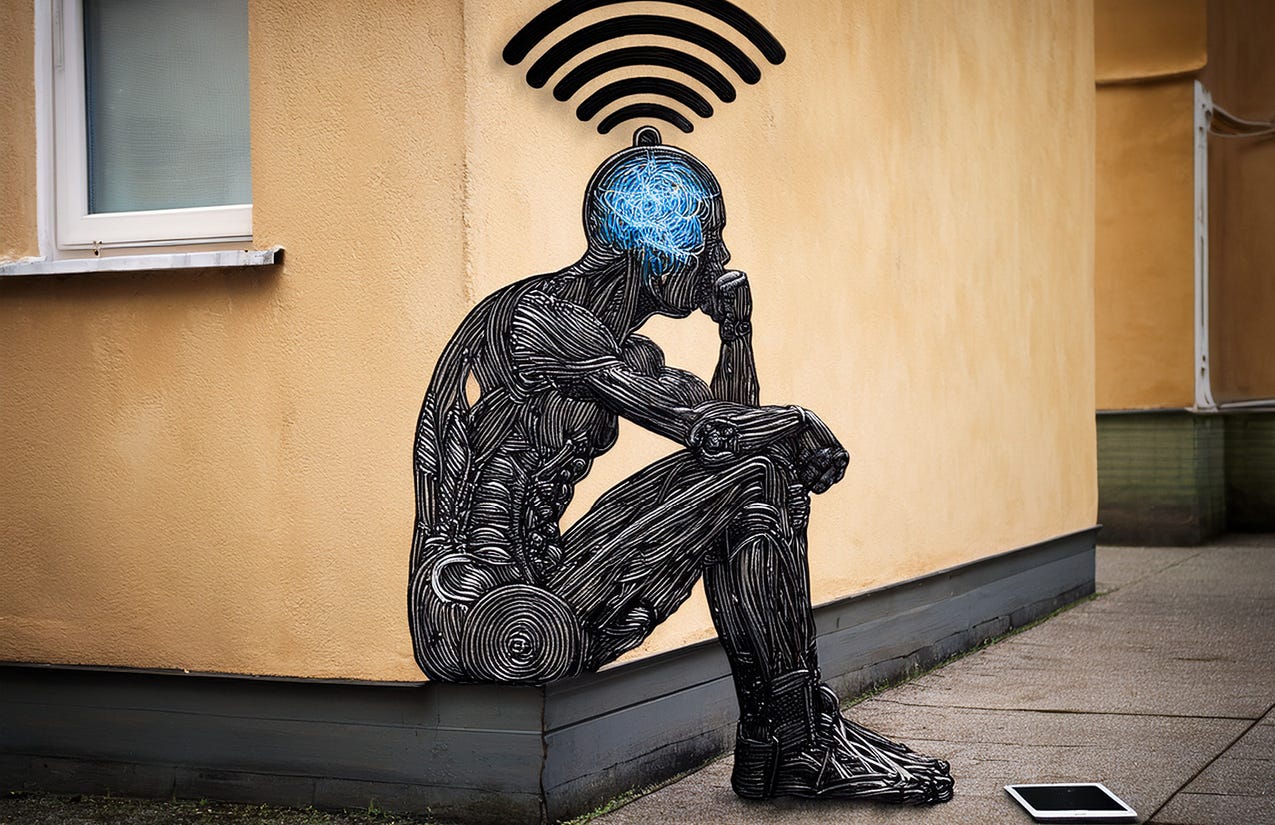
That question alone already divides societies. Because whenever people start measuring intelligence, gaps appear — wide, cultural, and personal.
The real question is not who is intelligent, but what intelligence even means.
Academics like to define it through science, medicine, law, or philosophy. Fair enough.
But none of that explains intelligence itself — nor limits it to the university club.
Here’s how the official definition puts it:
“Intelligence can be defined as the ability of an individual to think, understand, learn, and adapt to their environment by applying knowledge and making rational decisions.”
Notice something?
No mention of schools. No degrees. No dusty diplomas.
Thinking doesn’t need a license — just curiosity, a few active neurons, and a sense of wonder.
When the synapses gather for their daily meeting, the mind becomes a crowded café:
ideas enter, collide, argue, and sometimes leave together.
They debate, they change shape, they fail — and occasionally, one of them evolves into something new.
True thinking happens when there’s space to breathe,
when the inner censor takes a coffee break,
when the scissors in the head go dull for a while.
That’s when intelligence becomes creative —
when thought moves freely and unexpectedly.
Of course, not every thought deserves to become action.
Ethics, laws, and morals act as filters —
and thank goodness they do.
Because a “brilliantly planned murder” or an “intelligently executed coup”
are not achievements of intelligence, but evidence of its corruption.
And now, humanity has a new assistant — or competitor.
Artificial Intelligence.
A form of “thinking” that doesn’t question, doubt, or feel.
It connects information faster than we can blink,
and lets our own brain sink deeper into its hammock.
Anyone with Wi-Fi can summon ChatGPT or its cousins,
type a few commands, and watch it “think.”
Somewhere, a server overheats; seconds later, a perfectly phrased answer arrives.
Impressive.
And slightly terrifying.
Liberated from thinking — what a strange relief that must be.
I, for one, like it when my synapses work overtime,
when they wrestle, wander, and invent.
That’s where creativity lives —
in the messy, unpredictable space between thought and feeling.
The term artificial intelligence is itself suspicious.
Because intelligence isn’t just about linking data — it’s about creating meaning.
And meaning requires emotion, experience, and empathy.
AI can analyze patterns, recognize tumors, compose symphonies,
even imitate humour.
But it doesn’t know why a joke is funny,
or why compassion matters more than correctness.
Yes, it’s extraordinary.
Yes, it helps.
But it cannot love.
It cannot care.
It cannot weep.
So let’s be cautious about what we call “intelligence.”
Because without empathy, knowledge is just calculation —
and thinking without feeling is only half the miracle.
Too artificial.
Too smart.
Too soulless.
To keep.
Ursprünglich erschienen auf swisschris.ca