


After all, most philosophers in Greece grew on olive trees, so to speak — people who had mastered reading and writing. On top of that, the philosophically inclined had an awful lot of time to hang around the Acropolis every day, praising each other’s philosophies. And the prizes were lousy: a pat on the shoulder, a poem, maybe a goat.
At some point one of these bearded fellows had a thought, and immediately sensed it was hyper-powerful. He lowered his voice and whispered the not-yet-clearly-defined idea into the other men’s ears.
“How about, gentlemen, we hold a demo that leads to a cracy, and so hand rule over to the people?”
Ouch, this idea nearly brought about the twilight of the gods, because Zeus had extremely well-trained ears. And spies. At least I think so.
So, so — people’s rule was founded and grounded in sunny Greece, was it? Well, the newly defined term democracy had a subtitle, to make the matter a bit clearer. I don’t know the ancient Greek phrase, but translated it means “participation in the forming of political will.” Though — no, the Greeks would never have gotten this tapeworm of a sentence past their lips. They’d have written a fat book out of it, if the printing press had existed yet.
I’m especially fond of the first half of democracy. When the people are offered possibilities, by way of demonstration, for how every single capable citizen might take part in the affairs of the authorities — how appealing is that? Yes, the word “rule” takes some getting used to, since ruling sounds drastic. On the other hand, the demo shows how seriously citizens are taken when they’re asked their opinion on matters of government. The system of demo and cracy has developed dramatically further since then.
Say the citizenry isn’t particularly fond of this or that behaviour from the government. Then they simply reach for the tools of democracy and organize a demonstration in the street. Strikes and protests included. That way, misconduct gets rubbed loudly and plainly under the rulers’ noses.
Well, bravo — that’s demonstratively called the evolution of humanism, and it works.
Looking more closely at the term democracy and its effects, a faint smile tends to creep across many an observer’s face. Because under the philosophical microscope, democracy means nothing other than “the power of the people over the people.”
Originally it simply stood for the common weal. Full stop. And this “weal” kept watch over the authorities, so that those authorities wouldn’t plan, or even commit, any “weal-lessness” against their own people. But at some point in modern times, this loose kind of demo-and-cracy got declared a political system. A system usually stands for systematic execution. Yet here, exactly the opposite happened.
Democracy as a form of government wrestles with variants of the original idea. The grandchildren and great-grandchildren of the Greek idea barely resemble each other today. Mostly, the democratic variants have been laid out differently from nation to nation.
Why? Because the people run the show? Yes, that’s certainly part of the variant-fantasy.
No, that’s not something I want to get into this morning at half past five. But the idea itself is fascinating, when people are willing to try experiments. That’s called progress and process — when even nations can be persuaded that a better political landscape can emerge if citizens get to take part in it. Not just as taxpayers, but as co-creators.
A demonstration of democracy for planet Earth?
Gladly.
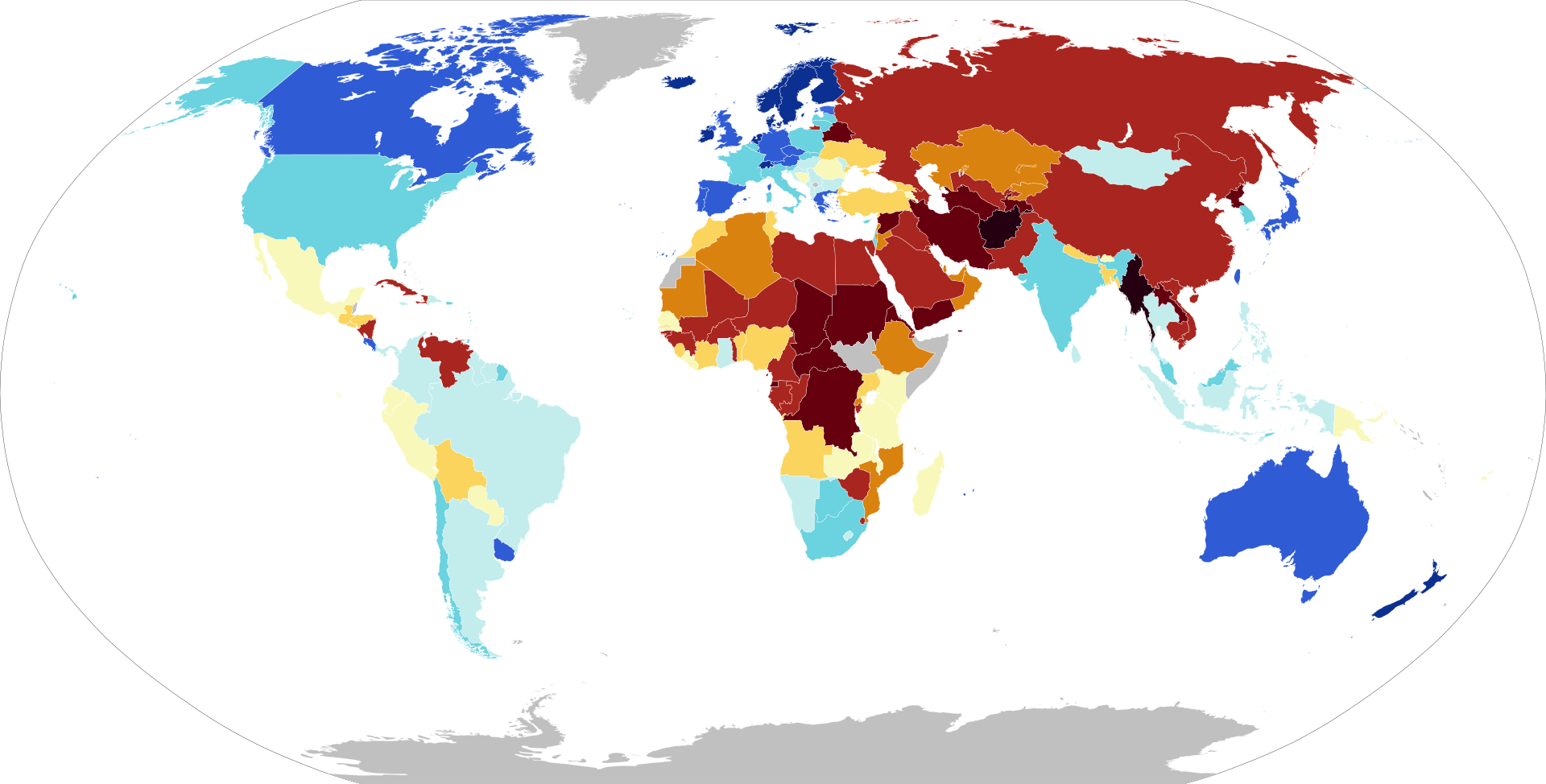
Von Dashing24 - Eigenes Werk, CC BY-SA 4.0, https://commons.wikimedia.org/w/index.php?curid=160852381