Experience makes you wary. At half past five I see the first results, already with the brakes on. I’ve muted the commentary from the American news. The headline, though, glows in the dark autumn morning: the Democrats have won back both chambers.
This morning has reflexes. The Canadian reflex? Relief. The second reflex showed up in the doorway a second later: what does this election result mean for us Canadians? The answer is sobering: less than hoped and more than feared.
America voted. Canada watched. As always.
Relief is one thing. Power is another. Because: Congress is not Customs.
These tiresome punitive tariffs sit in neither the Senate nor the House of Representatives. They squat in the White House. That lesson we, and the rest of the world, already had to learn back in February. The House voted against the tariffs on Canada, but the veto from the Oval Office was stronger.
So does anything actually change for Canada come January 2027? Well, the noise level out of Congress will certainly get louder. The hearings will line up, the budget fight will escalate, and politics will sit in the shop window for a while. Take the Swiss Parliament: it can annoy the Federal Council, block it, put it on the spot — but it cannot remove it. Congress sits there much the same way: loud, but without a key to the Oval Office. The same holds in Washington when Congress irritates the sitting U.S. President. Full stop.
That was today. What comes is two years off yet.
But which scenarios will turn up on the American political floor come January 2027?
Elbows Up — or Elbows weary already?
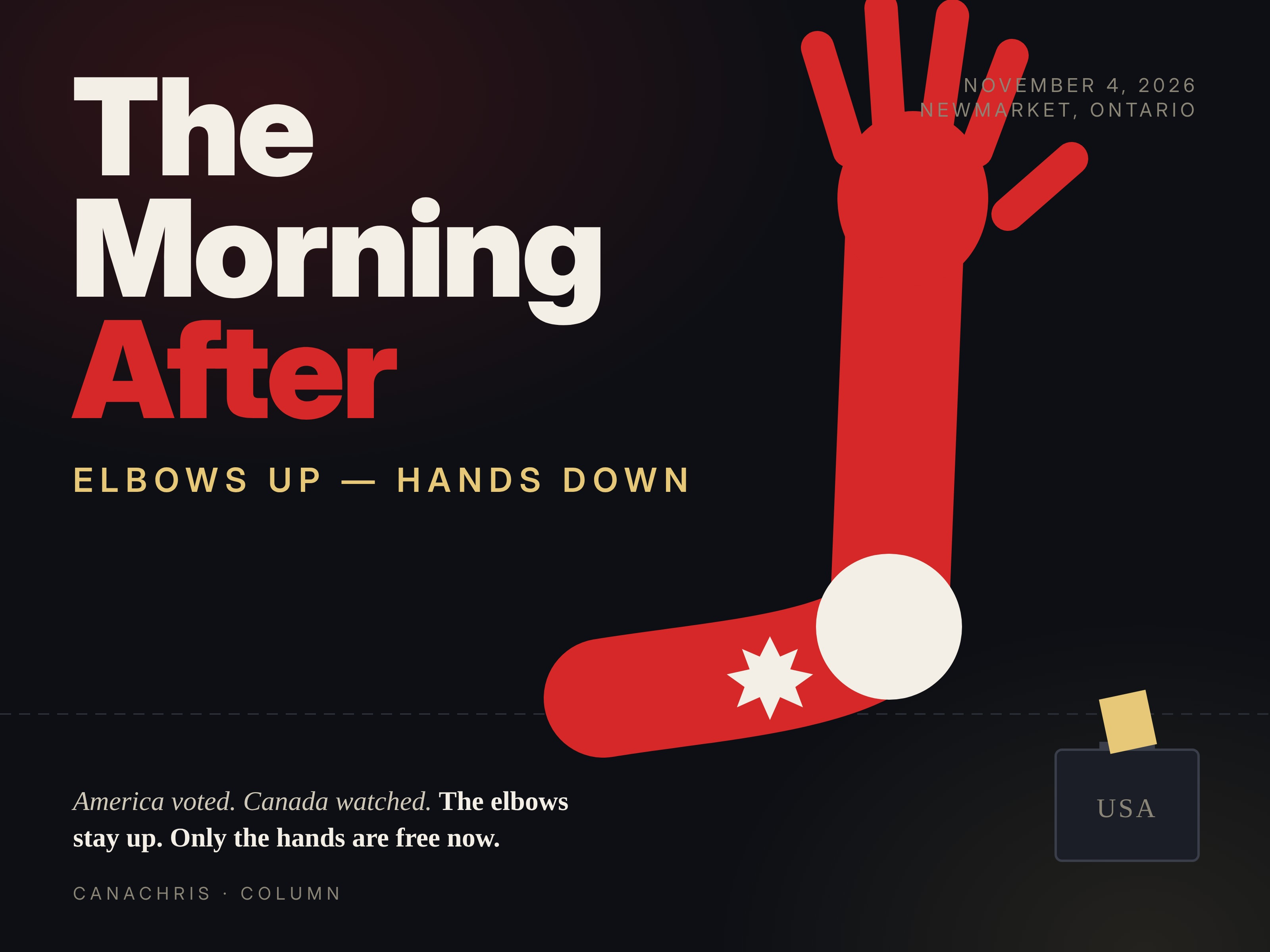
The real question in the room is how Team Canada behaves. The phrase borrowed from hockey, “Elbows Up,” was 2025’s answer to no end of threats from the south: the 51st province, the punitive tariffs, the toxic mockery. The threat hasn’t vanished — it’s just put on a tie and moved into the office. From pure rhetoric, the Elbows Up has slipped into administration. The slogan still holds, but with different content: it’s no longer the hockey dad bellowing at the rink’s edge, but politicians calmly, soberly reading the contract.
Elbows Up is not a stance against America, but one for Canada. And whoever instructs their diplomats to no longer shake hands with a U.S. candidate has understood: the elbows today protect the face, not the fist.
My coffee has gone lukewarm by now. My coffee has gone lukewarm. My mood hasn’t — it’s been boiling since I saw the numbers out of Congress. Naturally I’m pleased with the outcome at our southern neighbour’s, that the Democrats finally have some power back, enough to prevent the worst and bring better policy into Congress.
America voted, Canada looked south. Oh, but looking on doesn’t mean standing idle.
Switzerland has been practicing this for centuries: watch, read the contract twice, amend a clause, smile — and keep the elbows up.
“The elbows stay up. But the hands are free.”
My neighbour in Newmarket said: “Elbows up? I’m sixty-eight. My elbows are always up. Thank you, Arthritis.”