A world without criticism. Silence, praise, nodding. And nobody noticing when something goes wrong.
«How dare you?»
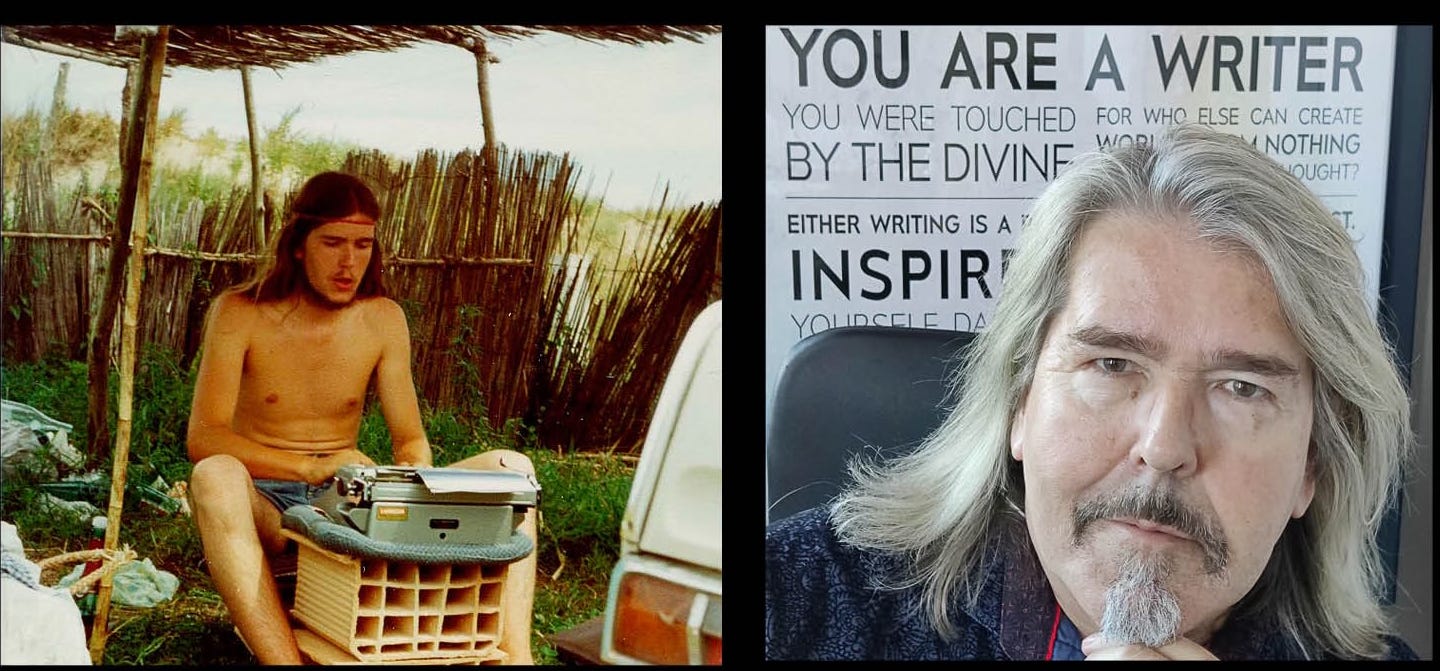
After my apprenticeship, I was looking for a job. The interview with the HR manager was relaxed, and the man was likeable. Inside, I kept wondering when he’d finally bring up my long hair.
«When I walk past the Klagemauer in Basel, I see all these young people sitting there. Would I recognize you, Mr. Wehrli?»
Bam! That was a fine but scalpel-sharp critique of my appearance. I swallowed hard at first and had to admit that I looked like all the other hippies. Jeans, jean jacket, long hair, and a symbolic attempt at a beard. The sting of his question wasn’t the appearance itself, but the idea that I was going around in uniform, and therefore conforming.
No, I wasn’t offended, but I felt caught, caught out, and exposed to my very core. Me, a hippie in uniform?
Greek for Beginners.
«Krinein» is the name on the Greek birth certificate of the word criticism. Back then, criticism had no idea how negative and unwelcome its existence would one day become. Narcissists and the hypersensitive broke out in mental sweats the moment a critical remark appeared anywhere nearby. «Critics ruin every idea and every action.» Well, now I ought to criticize that view. Critics aren’t naggers, they’re sorters. They direct their attention at a person, a situation, and at another perspective. That means critical voices take an interest in moments and examine them with a critical spirit. That, at least, was the practice since criticism was born. And what’s left of it? Today criticism aims at the person, instead of the situation. And it has become toxic. Criticism bent on effect-chasing is pretty much worthless and harmful.
So says criticism.
«Gäll, das isch nid bös gmeint»
I often heard this typically Swiss line in its appropriate cantonal dialect (This is not ment to be mean). And it always left me fearing the worst. The line is about as ominous as «mir bliibe Fründe, gäll?» when love dissolves into thin air (We can remain friends).
A critical remark among friends is especially delicate. Yet criticizing — that is, correcting — ought to be exactly the foundation of a friendship. Trust and affection, support and — criticism! It took me a long time to understand the “nerve” of a friend when they spread their critical observations of my actions or my attitude toward some topic across my sandwich. «Isch nid bös gmeint» didn’t help much there. Only later did I recognize the positive side of the critical remark. Friends didn’t want to watch me drift into disaster with my eyes wide open. They care about my well-being and my health. Just as I make an effort toward my friends’ well-being. Criticism is a service.
Welcome, dear criticism. You’re not mean. You just sound that way.
«Sorry, but…»
The Canadian school of dealing with people and situations is always friendly and polite. A pleasant thing in itself, how Canucks treat each other. Does that mean criticism has no business being around in Canada? Oh no, that would be fatal. Oh yes, Canadians absolutely criticize, but always wrapped nicely in words. And often with a fine, humorous note packed along. Reading between the lines is a basic requirement for recognizing the criticism at all.
For bilinguals like me, a particular challenge.
I learned my English strictly from rocking music and lousy movies. Listening alone, grammar and vocabulary came up a bit short. Yes, that’s criticism of me. From me.
I like it when Canadian friends and acquaintances criticize me. As long as I can actually recognize it.
When the Shoulder Shrugs.
Basically, I like criticism. With a few exceptions, of course. But when it’s entirely absent, when no critical remark appears on the horizon or anywhere else, then I grow suspicious. The situation gets tricky when I myself harbour critical thoughts about my own actions and ideas. That’s when I always hope that people close to me, and people living further away, will likewise draw my attention critically to this or that.
And if nothing comes? Absolutely nothing? Or pure agreement without the slightest critical remark?
Oh yes, that disappoints me a little. But it rarely happens.
I experience criticism as positive interest, not as an attack.
Whoever allows no critical thought at all is probably indifferent to me. Or they lack the courage to mention it to the person being criticized.
«I’m not indifferent to what you do!» That, and nothing less, is the sentence of a true critic.
Telling Instead of Judging?
Actually, the question mark in this headline is entirely out of place. Because criticism, and its perspective, is a story. A critical observation born of focus and a lot of thought. Someone took the trouble to look at an idea from several sides before passing judgment. Then that same person draws a conclusion that leads to the criticism.
Most of the time, criticism told as a story comes equipped with a few hints that can lead toward solutions.
How helpful and positive is that, really?
Criticism is the story of the critic’s view, not the verdict.
Every morning, starting at five o’clock, I tell my first story. As is well known, it’s provoked by a word or a sentence in an otherwise empty brain. From that I piece together stories like this one, with the help of ten-finger blind typing and letting my thoughts run free. That’s all there is to it.
I keep an eye on only two things: grammar, and unfair criticism.
After all, I want to lay out my perspective, not communicate with the world and its creatures as the eternal know-it-all. But above all, I always hope earnestly for critical comments on my stories. Flattery is highly pleasant, sure, but learning happens with criticism. I enjoy reading critical remarks, because they send my thoughts drifting in new directions.
Either I still stand behind my story, or I change it, because the critics made a good point.
Criticism, then, is neither negative nor toxic. It is attention held under a critical magnifying glass. And that leaves me grateful.
No, I didn’t cut my hair or change my style after that job interview. But the HR manager’s critical little story has stayed with me to this day.
Because it was meant honestly and personally. And it has held up, to this day.
Thank you, dear Mr. HR Manager.