Yet they are responsible for so many important things in communication. I cannot praise words enough — nor scold them enough — for what they set off in people’s minds.
I love words.
My life here in Canada is shaped, for the most part, by English words — or, better put, by Canadian words. The upshot: my Canadian life has acquired yet another word-pit to dig around in. Well, it is a daily ritual, fetching new words into my portfolio, my repertoire, and better still, my vocabulary. No, I do not fish every new word out of the lake and shelve it in my archive. That would do precious little for my powers of expression. Each day I fish out one word, memorise it as best I can, and tuck in the little slip of paper with its meaning. That is the one aid for putting the English language to better practical use. With some words, the trouble comes in the applying — the acoustic kind. Those with an interest in languages will know this well enough. I see the word, I know — more or less — how the word is blown out into the world phonetically. But then the tongue-stroke arrives and wants to play. Always to the detriment of the word sounding anything like it should.
One stumbling-word has been following me for decades: literally. Naturally I love this word, because it means — well — literally. And yes: in the title I have falsified the word and written it with two T’s. Why? Because I want to use this word not literally, but with layered meaning, for my morning story.
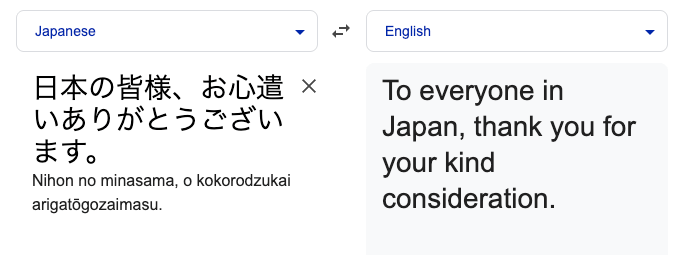
Litter means “Müll” or “Abfall” in German — and is not a unit of measure for liquids. And yes, there is, as every morning, a trigger for this altered word “litterally.” The culprits are the Japanese football fans.
By the thousands they have travelled to the United States, to Mexico, or to Canada, to watch their football team win. They spend a great deal of money on flights, hotel rooms, restaurants, and the match itself. Yes, millions of other football fans do the same. The Japanese fans tick just a little differently. After the match — after every match — the people from the Land of the Smile take out their blue plastic bags and begin freeing the rows of seats, the floor, from rubbish and grime. A liberation struggle of cultures. I watched video clips of people in their fan gear walking through the rows of seats, collecting every piece of rubbish by hand into the bags. Yes, in ALL the rows of seats in the entire stadium. When these fans leave the stadium, the paid staff of the stadium operation rub their eyes. Everything spotless and clean, as though not thousands of people had ever been there at all.
Such behaviour from Japan’s residents has already drawn attention at earlier championships.
The explanation is pleasingly straightforward: children learn — actually learn — in school what respect and cleanliness mean. And how important that is for a culture and for people living together. The motto of those learning is and remains: “We leave the place as we found it.” Litterally. Word for word.
For the Japanese people this is no special act, no extraordinary behaviour. They have this motto in their blood, or drawn in with their mother’s milk.
Unbelievable, if this idea of respect were to spread everywhere in the world.