The clouds: bright yellow, slightly orange, non-negotiable. The air is still there, but not recommended for breathing.
Well then.
The yellow-toxic smoke drifts in from the northwest, from forests most Newmarketeers have never entered, over roads they have never driven, past lakes whose names they do not know. Something very large is burning somewhere. Here the air smells of campfire without occasion.
The air here is bad. And because it is also badly behaved, it will hang over southern Ontario tonight, possibly until Wednesday. These will be long, inactive days — and anyone who must go out had better wear an N95 mask.
Charles Reich wrote in 1970 that communities are always stronger in their entirety, because they can organise. Every hippie in the room nods at that sentence and grins. He meant it hopefully. Perhaps he was right. Whether he was right becomes clear when visibility is poor — when someone on the third floor coughs and the neighbour knocks and asks, knocks and asks, whether you need anything. Just like that.
Community? A look at a village with a predominantly Indigenous population offers one example that gives reason for hope.
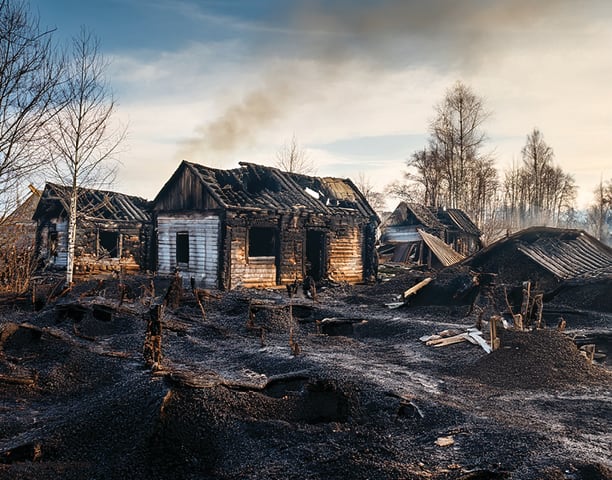
Kanaka Bar, British Columbia. In 2021, the neighbouring village of Lytton, fifteen kilometres away, burned to the ground. Nothing remained but ash and rubble. Kanaka Bar was luckier — the wind turned the fire in another direction. But the people of Kanaka Bar had not ordered that luck. They had prepared for it anyway. For years, they had been readying themselves for the coming changes in climate.
In August 2021, two further fires — the George Road Fire and the Mowhokam Creek Fire — came within four kilometres of Kanaka Bar. The community was evacuated, but it did not burn. The community had spent years preparing for exactly this: its own climate-monitoring system with water-level gauges on creeks, its own temperature sensors (one of which recorded 50.2°C on June 29, 2021) and air-quality sensors — and sprinkler systems that, according to Chief Michell, keep ember storms at bay. Kanaka Bar was a recognised FireSmart community with its own functioning infrastructure for water, power, and telecommunications.
The Kanaka Bar community brought together industry, government representatives, regional bodies, and community members to make plans for the next seven generations.
The Kanaka Bar Community Resilience Plan was named Top Project of the Year at the Clean50 Summit in Toronto in 2021.
The smoke itself, incidentally, is very well organised. It distributes itself evenly, makes no exceptions, treats single-family homes and high-rises alike, ignores postal codes.
And the world is yellow. And toxic.
I look again at Kanaka Bar, and learn.