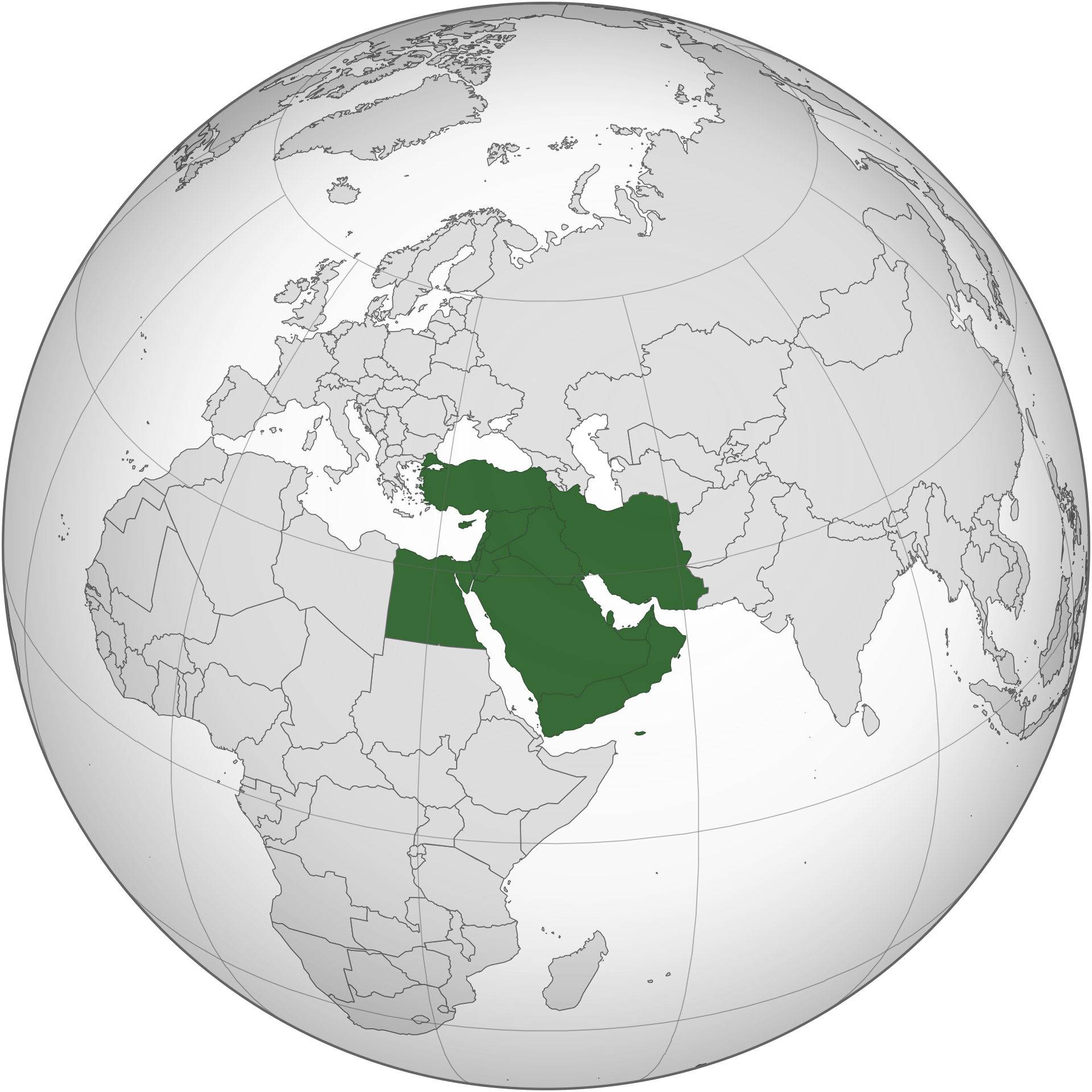
Mind you, the Ancient Orient really is ancient. Extremely ancient. After all, a fair number of Neanderthals were wandering around the areas we now call the Sahara, Iraq, and Turkey. This went reasonably well, right up until those Homo Sapienses spread themselves across every corner of the world. Yes, that was tens of thousands of years ago. That was the Orient of back then.
Why did this very Orient sneak its way into the word orientation? Was it a slip of the pen, or simply a lack of imagination when it came to coining a word like this? Oh no — the ancient Romans had a perfectly good reason for choosing the word oriens, because it points east, towards the place where the sun rises. And back then, the compass hadn’t even been dreamt of.
The Homo Sapiens women had to orientate themselves in the world first, and only then get around to inventing things.
How difficult is it, really, to find one’s bearings in the turbulences of the world today — in this smoke-hazed year of 2026? Yes, it is difficult. Despite GPS and artificial intelligence.
This applies above all to the male participants … — they never orientate themselves. Why? Well, we never ask for directions. Never, not ever. We wander and odyssey our way through the landscape until we bump into land. In all likelihood, it was precisely this wandering-about that led to the invention of the map and the compass.
Why should people orientate themselves at all? Surely it’s far more important to ask “Who am I?” than “Where am I?” For the where, I can buy a postcard at a news stand.
On the other hand, in one’s curious phase one does want to know which part of life one is currently in. I, for instance, am on the downward arc of what is usually called the life cycle. That much, at least, I have managed to find out. More pressing than ever, though, is the question of where humanity as a whole is drifting. Finding one’s bearings is growing more complex by the day.
A kingdom for a compass, when you actually need one.
Reading the morning news, what I recognise above all is a flood of outrages quietly becoming normal. And that sends my sense of human orientation into a skid. Things that were once taboo are now routine.
Reports and videos of children shot on purpose are part of breakfast.
And the creeping fascism no longer even makes the coffee taste bitter.
How does one recognise the loss of orientation?
When universal human rights no longer play any role. For instance.
For me, an ageing hippie, those human rights were always the measuring stick.
An orientation as standard.
Until recently.
Until recently?
Oh no — the orientation hasn’t been fogged over or disappeared. There are just a few indigestible chunks of news lying in the way, blocking the view of what is essential in the story of Homo Sapiens.
Good grief, why on earth did I choose this word for my morning splinter? I had no idea where this concept would end up taking me. Have I lost the orientation of the word itself? It seems so.
No, that’s not right either. I’m simply a little surprised at how a single word can lead to a story that is unplanned, spontaneous, and often irrelevant or misleading. The head, along with its cauliflower, needs to be able to orientate itself first.
And that can take a while.
I orientate myself again by looking to the news — and to the people mentioned in it who are holding fast to those universal human rights and acting accordingly.
Those people are still there. Beside all the loudmouths, barely audible.
But they are there. And there are more of them every day.
These people are my hopeful compass.