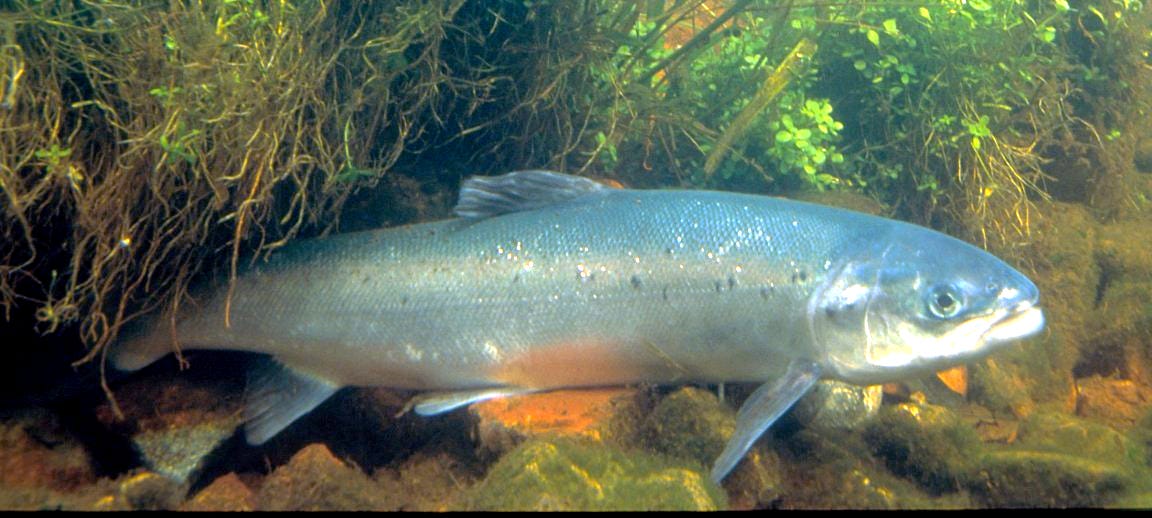
At the Wuikinuxv Nation, the roughly three hundred Indigenous people prefer to count salmon. And they do it wide awake.
These so-called creekwalkers set out on foot to count salmon in the many rivers and creeks. Notebook in hand, they count, fish by fish, living or dead. Further out in the river, a machine takes on this important work: sonar measures how many salmon pass by the village. What the sonar can’t know — or won’t — is which of the salmon actually make it to their destination. That job falls to the creekwalkers.
Speaking of salmon. What a strange story these swimming red-orange fish call their own. The hatched salmon babies are born in fresh water and are already discontent. These spoiled babies find the fresh water boring, so off they go in search of the sea with some spice to it. They spend their lives in the saltwater of the Pacific. Why? No idea. But the place of their birth still holds a spot somewhere in the salmon’s body. That’s why they keep returning to their freshwater home in the river. Their motto? Life is a river.
The salmon is a homecomer by conviction. Most of the time, the salmon finds its way back to the very creek it came from, pinpoint accurate. Oddly enough, they find their way home without any help from GPS or other apps. Researchers studying the salmon population believe they orient themselves by the Earth’s magnetic field and by smell.
The creekwalkers distinguish five different faces swimming along Canada’s Pacific coast: Chinook, Sockeye, Coho, Pink, and Chum. The Chinook is the giant among salmon. It can grow to the size of a child. Yes, a human child, not a salmon child. The Pink keeps a two-year rhythm in its calendar, as though it were following a metronome. The Sockeye turns bright red for its wedding, and its head turns green. The fashion of love makes love fashionable.
The fine print of the salmon handbook holds something dramatic. Pacific salmon spawn exactly once in their lives. Then they themselves become corpses. No pathos, just biology. Oh yes, the story naturally has a punchline. Bears drag the carcasses into the forest and fertilize the soil the trees grow in. The trees generously cast their shade over the creek. What a generous cycle nature sometimes dreams up.
The Wuikinuxv Nation catches less than one percent of the returning salmon. Because Indigenous people celebrate respect for nature. The people of Wuikinuxv lowered the salmon catch quota so the bears wouldn’t have to sit before an empty table.
So where did the sheep go, anyway?
Those who count sheep at night want to switch the world off for a while.
Those who count salmon want to keep the world going.