The Climat’s fault.
A thunderstorm, a burst of rage, a nasty headline, a toxic remark — that's weather. When we talk about climate, we're talking about weather events as an average across a long stretch of time.

A single insult is weather. Ten years of small jabs are climate. Nobody “makes” a climate in an afternoon — it settles in, the way moss or mould does.
Who invented it?
The word “climate,” that is. Taken from its Greek roots, climate means inclination — the angle at which the earth’s surface bows towards the sun. Over the millennia, the word “climate” has shifted not just in meaning but in reach. Climate itself could never have dreamed it would spill over from the purely meteorological into the world of economics. When people talk about workplace climate, they mean the employees and the felt reality of working life. When someone worries about the investment climate or the consumer climate, they’ll more likely mean the longer-term average of money changing hands. Some economists even believe they can bottle moods into numbers with a “business climate index.” Whether that holds up is itself a question of climate.
And how is climate doing in the private sphere? When a conversation about life, the universe, and everything flows along nicely, the conversational climate is in good shape. When a climate of trust settles over friends and family, there’s no tilt in sight. When a climate of love has grown over the decades, the everyday problems melt into small, manageable portions.
How does climate actually form?
Remarkably, the factors at play in forming climate are similar in the meteorological and the human versions of the story. If everything good comes from above, then the sun was probably the first boss any of us ever had. The same goes for management, for parents, for teachers — who are, as is well known, regarded as role models. Or would like to be. Air currents shape the weather and, over time, the climate. Trends are the Gulf Stream of society: what circulates makes itself felt. Loudly or quietly. Warmly or coldly. Emotionally or matter-of-factly.
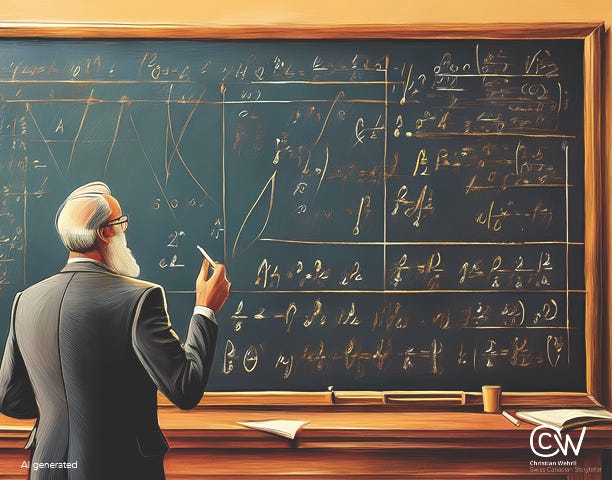
Climate in its most essential form is simply the result of many events, and it fits into this formula:
Climate = Sum of all weather ÷ 30 years
That’s the official formula for calculating climate, more or less. I don’t generally go in for formulas, but this one makes sense. Even to me. So: if that works — why not for human climate?
C = (T + G + R) × W ÷ T
T = Tone from above — the quiet or loud sunshine from bosses, parents, and politicians.
G = Gestures, small ones — kind words expressed, spontaneous help, honest compliments.
R = Rumours in circulation. What gets whispered carries no return address — and yet it changes the temperature.
W = Repetition is the decisive multiplier — nothing becomes climate without repetition. Once is weather. A hundred times is climate.
T = Trust is the denominator that weathers the weathering. The greater the trust, the smaller the storm’s impact.
I have no idea whether this is actually a workable formula. But I like the idea that people — you and I — appear in every variable. We can influence or shape the events, and then hope that the climate comes out humanly liveable, and not merely average.
Right, I think I’ve got it in short form now:
Human Climate = Weather × Repetition ÷ Trust.
Climate is innocent.