The finger doesn’t point anywhere, but it hints at a clear “Woe unto you if you ignore me!”
The word “private” used to be a strict instruction not to meddle in, let alone trespass upon, this so-declared sphere. I still remember clearly the first government citizen surveys. The questionnaire was relatively harmless. How many people live in house XY? for example. And yet the public outcry was enormous. The first federal census took place in 1850 and asked only for name, age, sex, marital status, occupation, and confession — that is, which faith group one belonged to. A simply knitted survey, then.
A hundred years and a few wars later, social media came around the corner and turned the private into a public affair. Show business for the exhibitionists of private life boomed. Or still does. Because the likes on one’s own online profile became more important than the once fiercely guarded privacy. What used to be a normal “This here is private!” turned into the marketplace of vanities. People put themselves on display and hope for approval. What was voyeurism yesterday is on public view today on Instagram, TikTok, and Facebook. Forever.
Private is precious. And costly.
Once upon a time, private property was a simple story: a house, a car, a family, and a status. That has changed drastically. Today we share and stream as if it might be banned tomorrow. The original sense of sharing — empathy, food, prosperity — has become the sharing of the private. The technical term for it is the “subscription economy” — we own nothing anymore, we rent our lives back, cancellable monthly.
The record collection means nothing anymore. We rent music, films, and books. We don’t buy software, we subscribe to it. In this digitalized world, private ownership no longer means mere material wealth. No — the protected private, the thing that shields us from total dependence on digital platforms, is the new currency.
Whoever, decades ago, went home after work, dropped into the chesterfield, and spent time with the family, was left alone by the company for that stretch. Today, though, we carry the office in our pocket and are perpetually on standby. Permanent availability lives in our heads, not in the employment contract.
My phone is switched on, but silent, with none of that tiresome vibrating. I’ve voted the thing out as master of my time. Time flies, as everyone knows — ergo my phone is set to flight mode. Permanent performance is easy enough to decline.
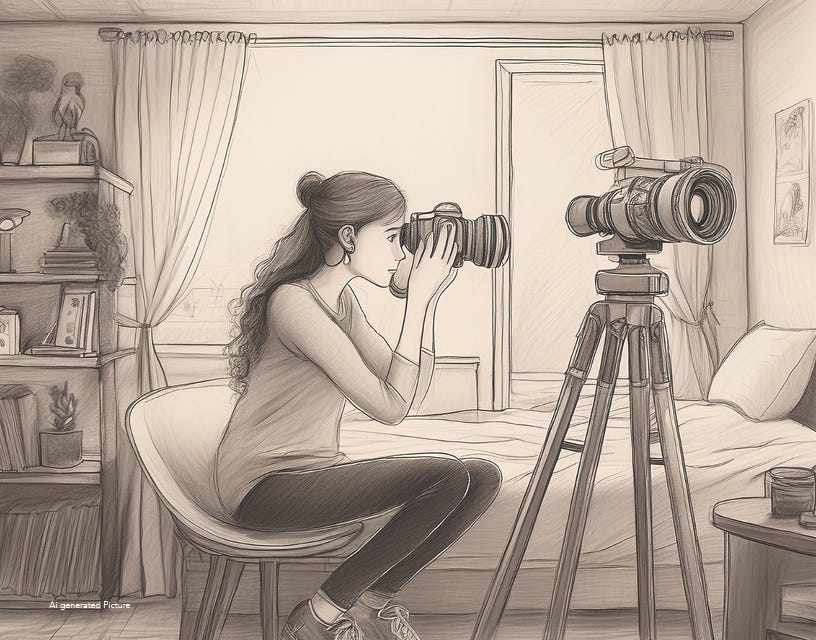
Real private life today happens wherever no camera is running and no status update gets shared.
Data is the real gold — complete with its own intoxication. The famous market is hungry for information about us, the users. Mostly, we hand over our innermost selves freely — the receipt for the attention we get in return. Private discretion has become the most valuable currency. Motto: my data belongs to me! We decide what the world may and may not know.
Is that good for the dignity and sovereignty of our private world?
Oh, thank you very much.