It is organised mathematically, not thematically. Yet what time does offer — aside from life cycles and hourly-rate hotels — is one fixed point at the end. The end of a story. The end of a monologue. Or the end of the noise.
It’s the story of the right moment. And that one is a perennial in the history of creativity. I like to think back on stories that have shaped me over the last 71 years. Because those small or large experiences often turned out to be a kind of steering. Usually, before the course changed, a few scales had fallen from one’s eyes. One of those stories takes place in a university art class, where students were busily at work on their paintings. The art professor strolled past, hands clasped behind his back. “What do you think of my painting, Professor?” The professor paused briefly. “Very good.” The student beamed. “Half an hour ago,” the professor added.
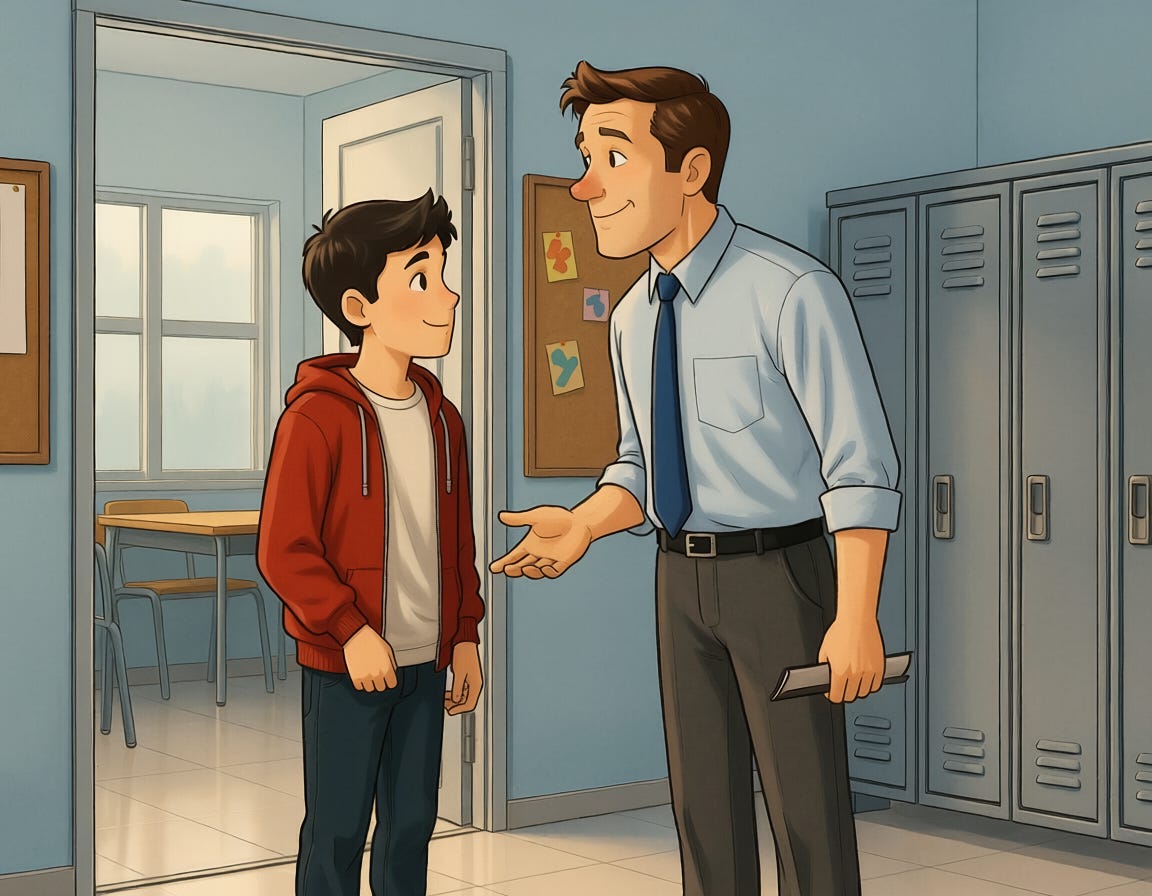
I had my own art professor, more than sixty years back. His name is Jean-Paul, and his lesson to me still holds. He marched into the classroom where I was once again trying my hand at class clown. He saw me. Said nothing. And waved me out. Jean-Paul closed the door and said: “You’re not an idiot, Christian.”
“Erm… no,” I replied, somewhat taken aback.
“So why are you acting like one?” I heard Jean-Paul say.
No more words were needed. The blow landed, and it still holds.
Those five minutes shifted something. Not loudly. But permanently. When is enough. When is silence. When is the story over.
When, if not now?
I don’t know whether my all-time favourite teacher Jean-Paul remembers this story. Or whether he was aware of how much his few sentences shaped my future.
Probably he doesn’t know.
But I know.
And I am grateful to Jean-Paul.
When does time make a point?
Now.