


Whoever first had the idea of turning the hide-and-seek game of bare, ugly walls into a promising Amber Room deserves to own the world — or at least its surface. Woodchip wallpaper was one of those traditional offerings for the majority of tastefully appointed middle-class citizens. It’s discreet, a touch rough, and it doesn’t chip. Wallpaper makes ugliness acceptable, or even loveable.
Wallpapering looks like one of the easiest jobs in the world. You measure the room, let the client pick a pattern, and paste the result onto the walls. Done.
Now, now — not so fast. Wallpaper has patterns, symbols, images, illustrations. And it comes in narrow strips. That’s precisely where the dexterity and the eye of the wallpaper hanger begins. How do these paste masters manage it so that, when you look at a papered room, what you see is a seamless, four-sided whole? Hardly anyone notices the individual strips. They’ve vanished completely from sight, because the pattern has no interruption, no shift that might disturb the overall impression.
And the atmosphere of the room has changed. For the better — mostly.
Wallpaper has further abilities in other areas of life that are worth illuminating. Wallpaper and its cousin carpet have a great deal tucked behind the wall — or under the floorboards, depending. Because they’ve established a sideline in the shadows just inside legality, making events, images, and reality disappear. Anyone who commits a transgression and doesn’t want to get caught first has a word with the wallpaper, and possibly with the carpet. A well-chosen wallpaper makes ugliness simply vanish — out of sight, out of mind. The same service is offered by a large-format carpet, under which unwanted things can be swept. That, in fact, is the carpet’s flip side.
The question now arises whether wallpaper and carpet both made themselves complicit, because they’re part of the scandal. In the situation, that is, when the wallpaper starts to peel and what lies beneath becomes visible. Or when the carpet trips up curious investigators or press people, because far too much that is unsavoury lies beneath it.
Most likely this will never happen, even though both are accessories — or at least passive participants — in a scandal.
No, the Epstein files, the party donation scandals, the emperor’s new clothes — they lie neither under the carpet nor behind the wallpaper.
They lie in plain view, undisturbed, in blazing sunlight.
Do we no longer need wallpaper or carpets? Scandalous goings-on, simply hung out in the fresh air to air — and no one flinches?
Good heavens.
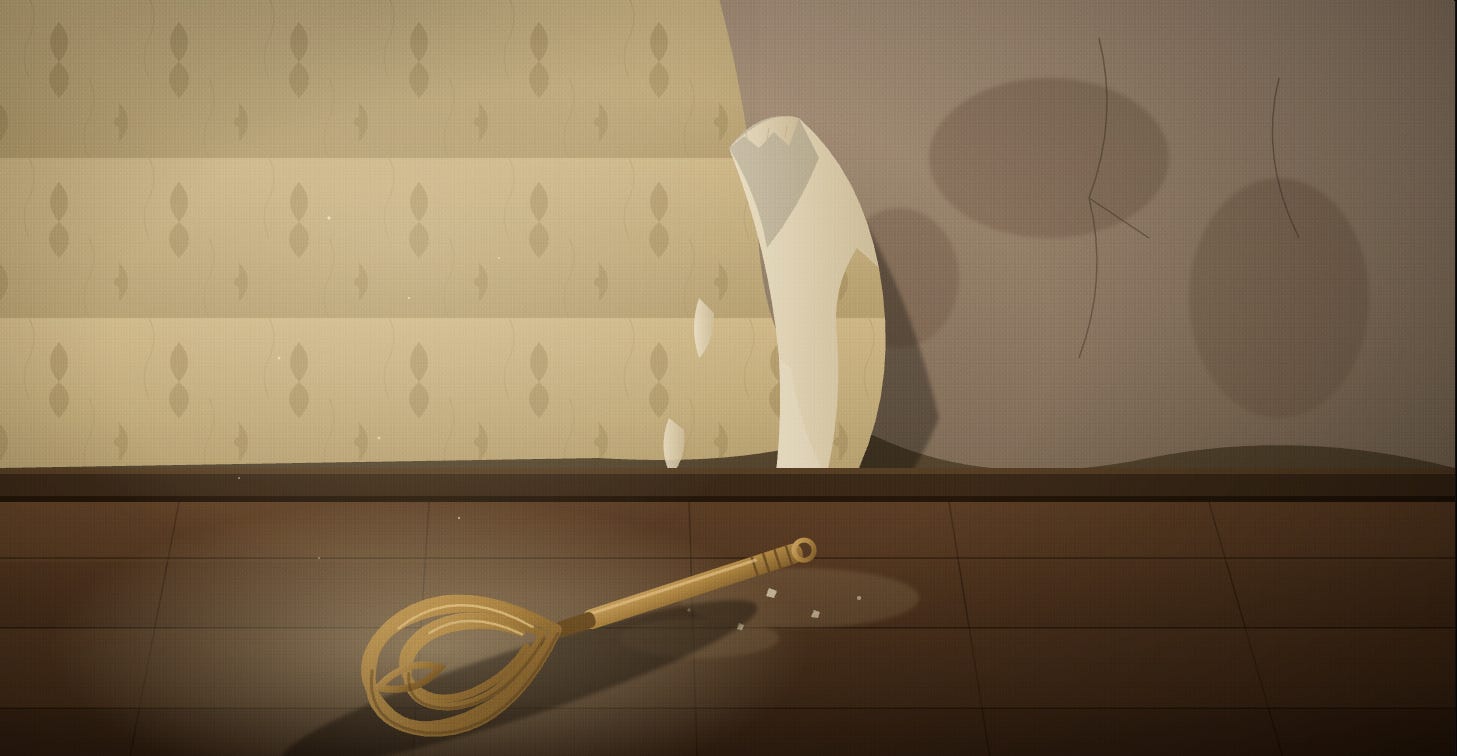
Where is a carpet beater when you urgently need one
?