He acted quickly and sought trading partners outside the United States of America. No spot on this planet was too far to diversify trade and speed up big projects. Add to that a pipeline deal with Alberta that nobody thought possible a year ago. And with it, loud criticism: from unions, from environmental groups, from coastal First Nations.
Canada carries itself more confidently, and the world is listening.
At the same time, the list keeps growing of those who see Canadians’ rights in danger: the price being civil rights, such as the right to strike, data protection, and environmental standards. Both are true.
One question keeps nagging at me: is there a calculation behind the anger?
Is our Prime Minister pursuing a smart plan, paved with stumbling blocks and detours? I don’t know. But the questions stay active and wide awake. So these are theses, not claims.
Thesis 1: Carney negotiates with conditions, not with gifts
That’s a bold thesis, but it’s on the table, and it’s documented. The pipeline to the west coast only exists if the Pathways carbon-capture project is a condition: “No Pathways, no pipeline.”
Alberta gets room to breathe in exchange. Room on the upside, not necessarily on quality. The emissions cap disappears, the power rules are suspended, and the tanker ban can be adjusted “if necessary.” Ottawa gets, in return, a net reduction target of 16 million tonnes of CO₂ per year, 10 of those from Pathways.
You can read that as a sellout or as serious leverage. The pattern? Carrot now, stick later, built right into the construction project.
A few things leave me looking ahead with some skepticism: the leverage only holds as long as nothing’s built yet. The cap is already gone, the tanker ban negotiable. Project costs climbed from $16.5 to $20–30 billion. Environmental groups figure that 10 to 12 million tonnes by 2030 doesn’t balance out an additional million barrels a day. Those are advocacy numbers, but somebody has to disprove the math.
Thesis 2: Speed is the shared currency
The second thesis is more uncomfortable. Bill C-39 is meant to speed up project approvals. Tucked into the same package is a change to Section 107 of the Canada Labour Code. Put more plainly: Ottawa can end strikes on the spot.
The government is raising the bar. Under the coming rules, a special mediator gets appointed and given a 21-day deadline. A report is then expected. “Significant national harm” must be demonstrated, and the right to freedom of association weighed against it. Unions say this entrenches the intervention power and stretches it into a “national interest” formula.
Both sides read the same text, but the conclusion gets written differently.
What’s unusual is who’s lining up with whom. Airlines praised the bill at the hearings. The Conservatives, meanwhile, backed an NDP motion to scrap Section 107 entirely. Who stands where is right out in the open.
Bill C-39 is still sitting in committee. I haven’t found a vote on amendments, and my sources are about two weeks old. This much is known: unions are demanding the new powers be struck out.
My thesis: anyone wanting to speed up big projects needs to make strikes at critical junctures predictable. But that would no longer be a trade of conditions — it would be a concession extracted from workers up front. I haven’t found a corresponding benefit for them. If there is one, Carney should name it.
Thesis 3: A master plan is convenient, a banker is more likely
This thesis is tempting to read: behind the obvious hardness lies a plan we’ll only understand much later. Possible. And dangerously convenient, because it can’t be disproven. Every criticism then counts as proof the plan is working.
I’ll put a plainer thesis against it. Carney is a banker who converts risk into time. Wherever a strike or a process costs time, he cuts the time away. That would be consistent, and not even remotely a secret.
Back to the future: it’s spring 2028, and I’m sitting at my desk early again, before the first coffee, same as always. I dig the four questions from today out of the drawer and check them off. What became of Carney’s game in those two years? This is a thought experiment, not a forecast.
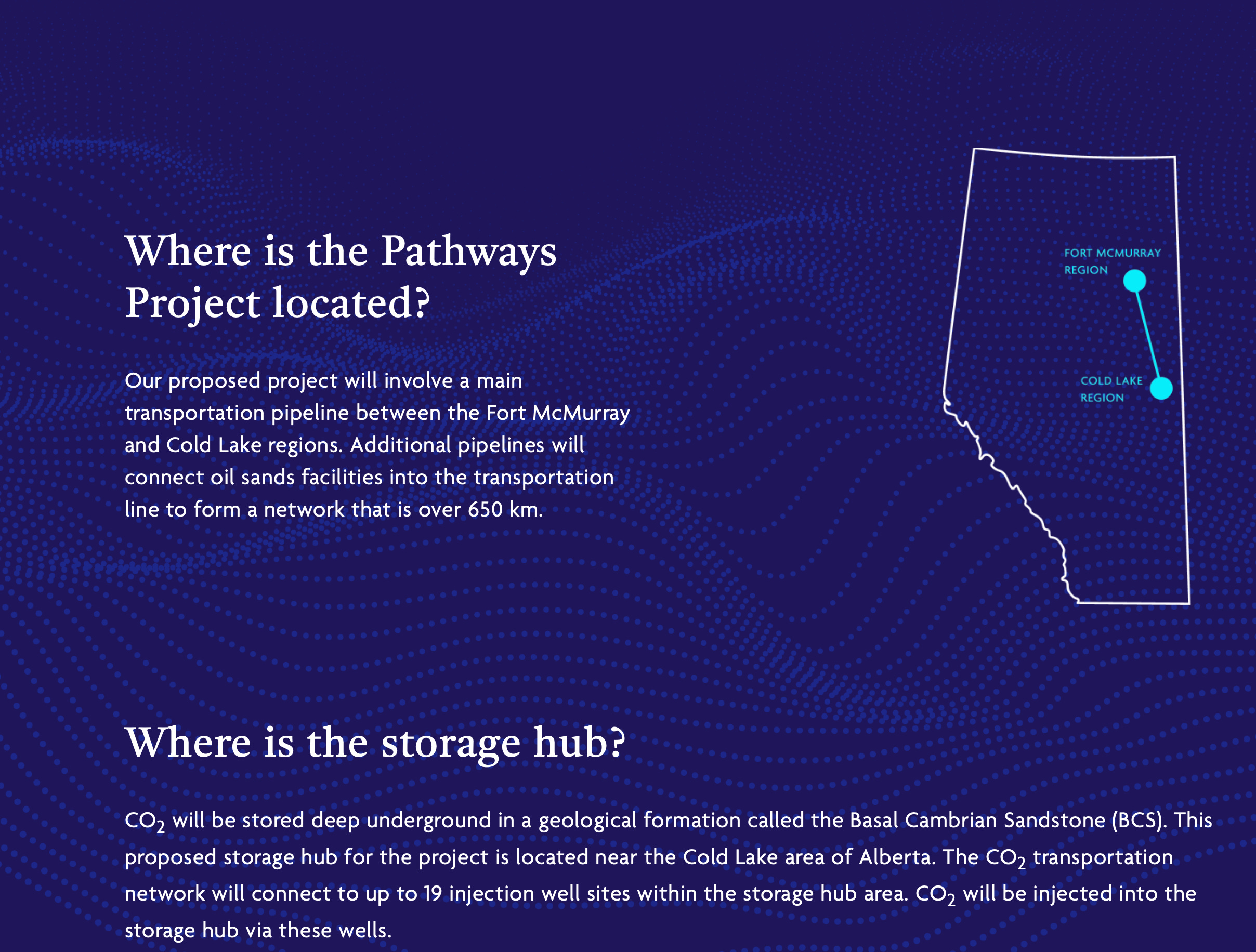
First I look to Fort McMurray. Is there steel in the ground, are pipes running toward Cold Lake, or is it just press conferences? The sequence matters. If Pathways got approved and built before the pipeline saw a dollar, then it was a trade of conditions, and Carney set the lever right. If the pipeline money came first and the capture project came whenever, then it was an advance on a promise, and Alberta won.
Then a look up to the north coast of British Columbia. The tanker ban was allowed to be adjusted “if necessary.” If it’s still standing, unchanged, then the clause turns out to have been pure scenery for threats. If the clause fell, then it becomes clear what “if necessary” meant. Premier Eby warned of this reading, and the coastal First Nations communities all the more so.
Then I knock on the courts’ door. If Bill C-39 went through, what do the judges do with Section 107? There are lawsuits that have been examining this provision for years. If a law defines such proceedings as moot, I’d take that as a bad sign. Because it would mean the legislature keeps the last word over a fundamental right. Not the court. But if the judges decide against it, either way, then the system worked, even if I don’t like the result.
What else was there? Ah yes, a number. Savings of 16 million tonnes of CO₂ per year. That’s the promise. If there’s a public report every year that I, as a layperson, can read, and that an environmental group can check the math on, then Carney has made himself measurable. If instead nothing shows up, or only a report nobody can verify, then the condition was just a word.
Four questions, and none of them demands a verdict on Mark Carney’s character as PM. They only ask whether he does what he said, and whether we can check. That’s the fairest test I know for any politician. “Don’t listen to what they say. Watch what they do.” For a politician tackling as much at once as Carney, that test counts double.
The Yin-Yang image
The philosophy behind Yin and Yang has neither the good side nor the bad side in the lead. Each carries the seed of the other within it, the bright point in the dark and the other way round. If Carney is the symbol, we shouldn’t ask whether he’s good or bad. We should ask whether the dark point in the bright part is intentional.
Whoever plays a trade-of-conditions game has to lay the conditions out in the open and let themselves be measured against them.
We Canucks are watching.$